The episodes are short, sometimes barely longer than a song. Just a voice, some carefully chosen music, and stories about people you’ve never heard of. It’s a history podcast, but not in the episodic, recommendation-driven vein of most others. There are no abstracts, no summaries, no descriptions of what’s to come. It simply begins.
How do you write about something that refuses to summarise itself? What held me wasn’t the stories themselves, but something harder to name. Something about which stories get told, which don’t, and who gets remembered. To explain that, I need to go back to a year in the Sixties.
In 1966 Jean Rhys wrote Wide Sargasso Sea as a prequel to Charlotte Brontë’s Jane Eyre (1847), dealing with the background to Edward Rochester’s marriage from the point of view of Bertha Mason, who is the famous “madwoman in the attic” in Brontë’s book. Rhys reimagines her as Antoinette Cosway, a Creole heiress. The novel is set in Jamaica after the abolition of slavery. Antoinette is caught between the Black community that rejects her family’s plantation wealth and the white colonisers who see her as tainted by Creole heritage. She is sold into marriage to Rochester. He renames her Bertha, takes her to England, and isolates her from everything she knows. Where Brontë’s Bertha exists only as a bestial obstacle—violent, inarticulate, barely human—Rhys gives her a childhood, a name that matters, and a voice. In this prequel Rochester doesn’t discover his wife is mad; he makes her so. The footnote becomes the story.
Similarly in 1966, Tom Stoppard debuted an absurdist play at the Edinburgh Fringe Festival named after a single line in the final scene of Hamlet: “Rosencrantz and Guildenstern are dead”. In Shakespeare’s play, they are marginal figures. Interchangeable courtiers summoned to spy on their old school friend. Stoppard transforms them into bewildered philosophers. They exist in the wings, trying to make sense of events they seemingly can’t control or even fully witness. Where Shakespeare’s pair accept their mission and march toward death, Stoppard’s spend the play flipping coins (which land on heads ninety-two times in a row), and struggling to remember which of them is which. The action of Hamlet happens offstage or in fragments. They catch glimpses of the Prince, hear snatches of the court intrigue, but mostly they wait, confused, asking questions no one answers. When they finally read the letter ordering their execution, they don’t understand why they must die. Guildenstern disappears wondering when he passed the point where he could have stopped it. The footnote becomes existential: two men trapped in a story they didn’t write, trying to understand their role in a play that barely notices them.
Both works ask the same question: what about the people history forgot? The madwoman locked in the attic. The courtiers waiting at the sidelines. The ones whose names appear briefly, whose stories get compressed into a simple meaning, whose existence serves only to advance someone else’s narrative. Rhys and Stoppard were doing something quieter. They looked at the margins of canonical texts and wondered what it felt like to live on the edge of the page.
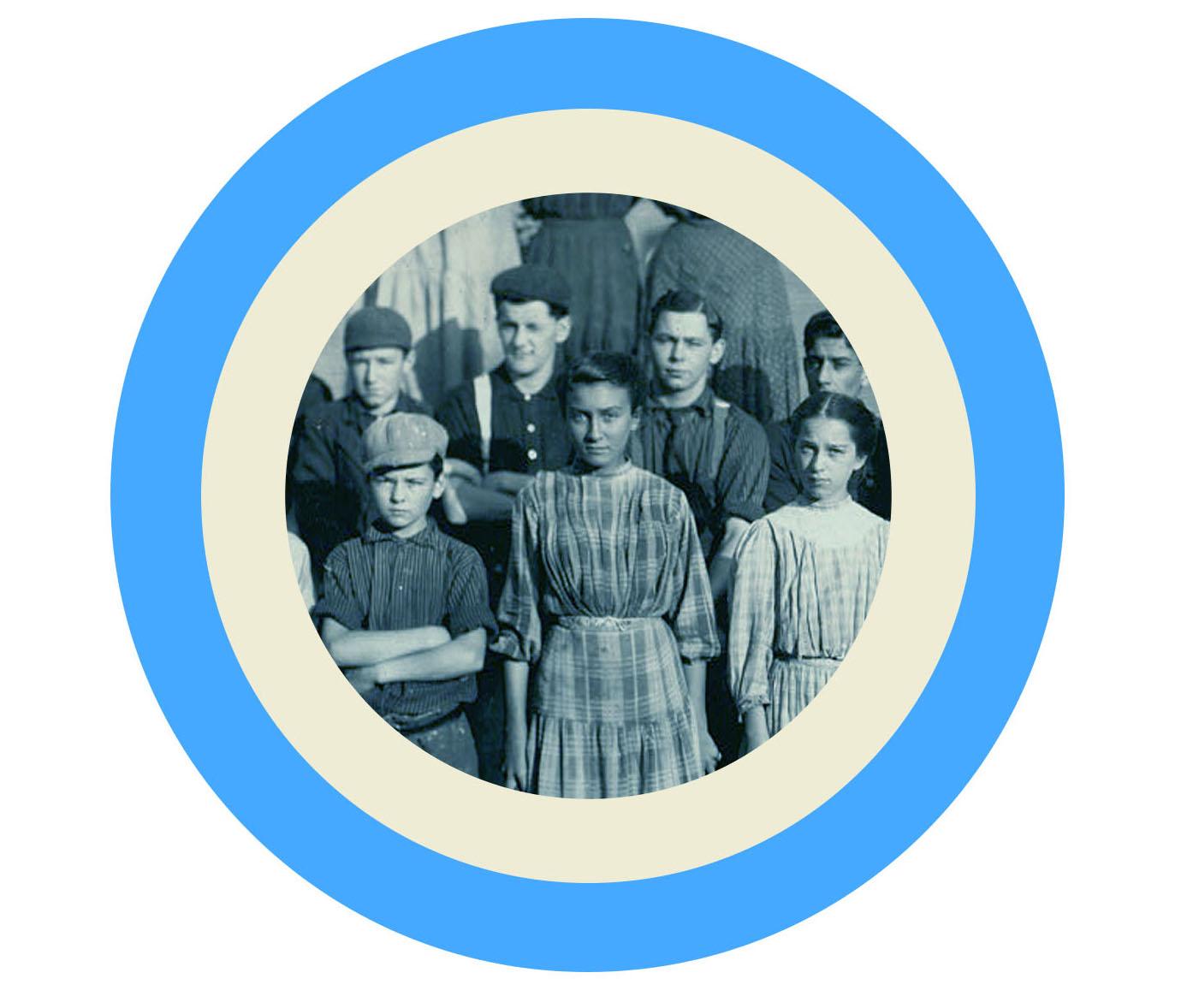
Nate DiMeo’s The Memory Palace does this with American history instead of English literature. Since 2008, he’s been excavating historical footnotes—people who appear once in an archive, events that merited a single paragraph, moments that seemed too small to remember. A teenager who worked as a human cannonball. The labourers who dug the caissons for the Brooklyn Bridge. Herb Morrison, reduced by history to three words: ‘Oh, the humanity’, though he recorded thirty-seven minutes of calm, professional reporting after. These aren’t the presidents or the inventors or the pioneers with statues in town squares. They’re the people waiting in the wings while history happens elsewhere.
The Memory Palace has no episode descriptions, no previews, no ‘in this episode we’ll look at…’ introductions. DiMeo’s voice is unhurried, soft, conversational, laid over music that swells and recedes without announcing itself. You don’t know where the story is going. You don’t know what the story is about until you’re inside it. The effect is less like learning history than like remembering something you didn’t know you’d forgotten. He doesn’t tell you what it’s about beforehand. He just asks you to listen. Just for eight minutes. Just when you have a small amount of time. Just to notice that someone was once here.
Because that’s what all these footnotes have in common. Someone was here. They did something that mattered to them even if it didn’t matter to history. They looked up at the sky, or made a choice, or felt something they couldn’t name. And then they disappeared into the margins, mentioned once if at all, their lives compressed into a line or lost entirely. DiMeo insists they’re worth remembering anyway. Not because their stories changed the world, but because they lived them. Maybe that’s why the podcast unsettles me. It suggests we’re all footnotes, really. All living tiny stories we hope someone, somewhere, might notice. Waiting in the wings while history happens elsewhere.