Each year I navigate the same quiet negotiation: which parent gets Christmas Day? As I’ve aged, I’ve sometimes chosen neither, spending it travelling, with a partner, or friends. Late in 2024, a thought struck me: no one ever asks to spend Christmas with me in London. Then another: no one visits my brother either. Not once in seventeen years since he emigrated to South Korea have I suggested spending Christmas in Seoul.
So there we were that Christmas, my brother and I, the morning after I landed, walking together up a snow-and-ice-speckled mountain out of Haebangchon—the old North Korean area—toward Namsan Tower at the top. Catching up with someone you haven’t seen in person for over a year creates a strange dance of significance. Minutiae feel too trivial to mention; big things too large to puncture. Perhaps this is why we instinctively talk about films and music instead—art gives us permission to discuss the profound through the safe container of someone else’s story. Rickie mentioned Perfect Days, a 2023 Wim Wenders film about a Tokyo toilet cleaner living his life with deliberate simplicity. The description of its beauty, its poignancy, added it to my mental list.
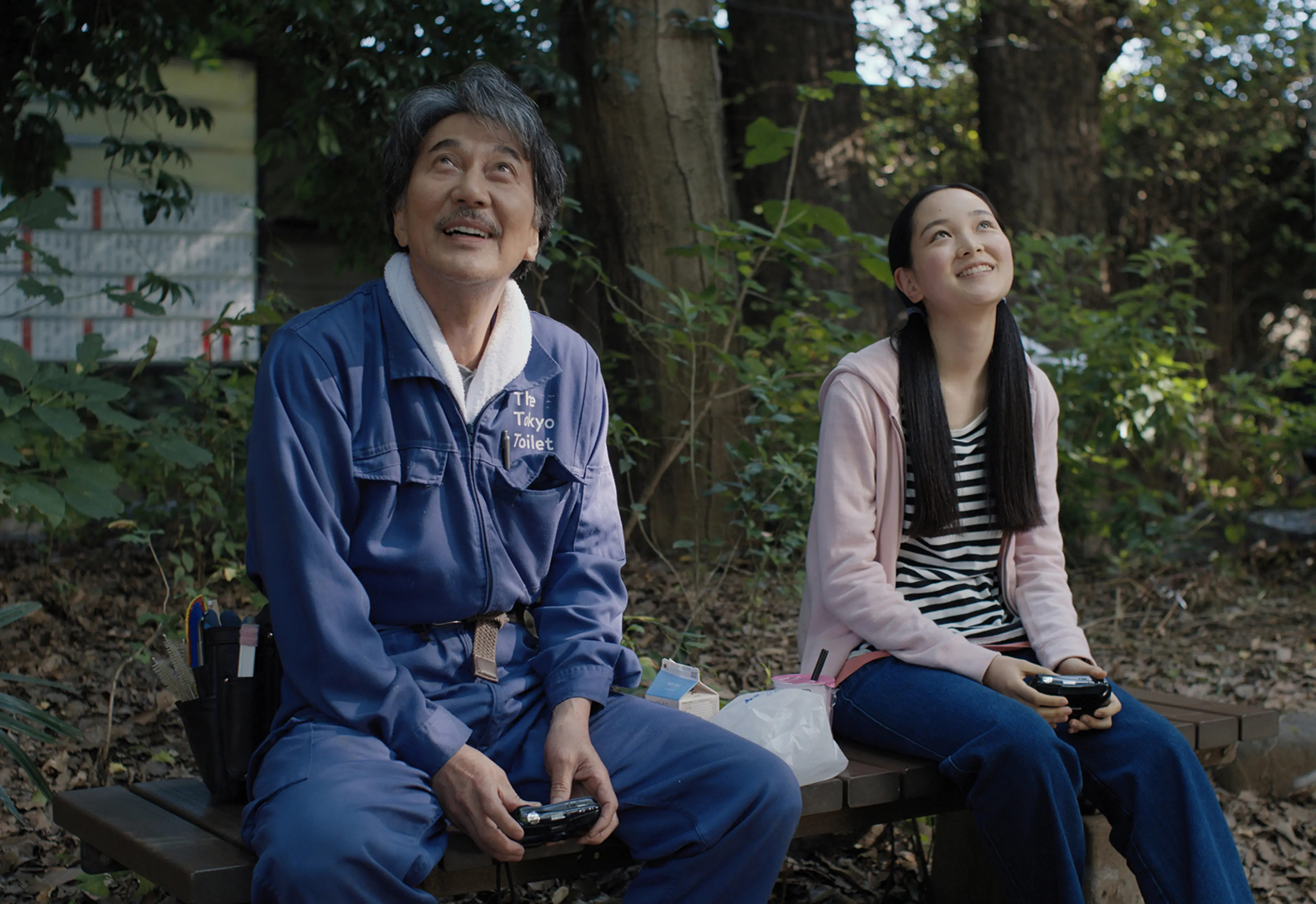
That walk stayed with me longer than most hikes. As did the film after I watched it back in England last week. Like our walk and talk in Korea, Perfect Days refuses spectacle. There are no dramatic arcs, no grand heroic gestures, only Hirayama, a public toilet cleaner in Tokyo, whose structured life becomes a meditation on what it means to simply be alive.
Kōji Yakusho’s performance is remarkable in its quietness. Through minimal dialogue, we witness someone who has found contentment not through accumulation or achievement, but through radical presence. His morning routine of waking, tending to plants, listening to cassette tapes of Lou Reed and the Velvet Underground isn’t shown as drudgery but as ritual with meaning.
We live in an era of compulsive consumption—short-form content, endless scrolling, the tyranny of more. Against this, Hirayama embodies a different philosophy entirely: ‘next time is next time, now is now’, a mantra he shares with his niece while cycling across a bridge at sunset. Not clinging to the past. Not anxious about imagined futures. He photographs trees. He notices komorebi, the Japanese word for sunlight filtering through leaves, a concept so specific it suggests an entire culture built on noticing such moments. He approaches toilet cleaning with the same care a craftsman brings to wood, the same attention a calligrapher brings to each stroke.
Watching Perfect Days, I understood why that walk with Rickie stayed with me. Both the film and our walk together refused the tyranny of productivity. We weren’t hiking to reach the summit efficiently. Hirayama wasn’t cleaning toilets to advance his career. Our nervous systems recognise this kind of presence—the difference between manufactured purpose and genuine attention. Perfect Days works like a tuning fork, bringing us back to a frequency we’ve forgotten: the one where washing your hands matters, where the route you take to work matters, where the music you choose for the morning matters. Not every choice needs to be optimised for productivity or performance. Some, like where to spend Christmas, which book to read before sleep, whether to take the longer route through the park, are invitations to practice presence. To honour repetition not as monotony but as ritual or meditation.
That snowy walk with my brother from Haebangchon up towards Namsan Mountain. The film he recommended months later becoming a map back to that morning. The way he’d learned to notice Seoul’s details the way I once noticed London’s, both of us building lives of attention in cities where we’d chosen to be strangers. And the walk’s tiny details: the empty public gymnasium, the wind as you neared the top, that I was wearing his football shoes, that some paths were icy, that the air was cold but the sky bright blue. The way these things have stayed with me. Perhaps that’s what komorebi really means: the moments when light breaks through, and you’re awake enough to notice.